Repository-aware agent workflow combining bounded context, MCP tools, validation and independent review.
Krzysztof Kaim
AI-native systems, built with production discipline.
Agentic engineering, MCP integrations and enterprise software grounded in systems that have to survive production.
GitHub activity · 13 mo.
…0 points scored
Public activity by @krzysztofkaim
LessMore
Kaimtosh Classic
Profile Card / System Ready
KAIM / 01
Krzysztof Kaim
Senior Software Engineer · AI Systems & Agentic Engineering
- Location
- Kraków, Poland · Remote
- Contact
- —
- Status
- Production ready
functional domains in Manufaktura MES/APS38
active REST endpoints across Manufaktura396
xUnit and Vitest test methods protecting regression1,789
machines represented in telemetry flows54+
Sole application owner across planning, execution, ERP, warehouse and machine-state telemetry.
System stabilization, large-dataset performance work and production-grade operational improvements.
Technical owner / sole .NET engineer building and operating the production MES / APS platform.
Founder and consultant across long-term software engagements in enterprise and product contexts.
Security testing and OWASP-focused assessment of enterprise content-management software.
Agents need release engineering, not just better promptsAI Engineering · 2 min read
A practical model for turning agentic coding from an impressive demo into a controlled delivery loop with context, evidence and human-owned releases.
09 Aug 2026UAT is not the end of developmentDelivery · 2 min read
What resolving 112 client-reported UAT issues taught me about treating acceptance as a production-design feedback loop, not a release gate.
08 Aug 2026Treat MCP as an operational contractAI Engineering · 2 min read
Why MCP integrations become more useful when you design them like production interfaces: narrow capabilities, explicit trust boundaries and observable tool calls.
07 Aug 2026Browser memory is a product featurePerformance · 1 min read
Large enterprise tables do not become fast because the component library is fast. The data contract, query shape and rendering strategy have to agree.
20 Jul 2026This system is intentionally small.
For selected work or AI-native systems, send a direct note to:
Attention: Krzysztof KaimKAIM / WORK LIBRARY
Start with the systems that define the work, then inspect the evidence behind them. Full case studies have canonical pages; archive files form a compact inspection layer.
↗Full case □Quick inspect
01 / FEATURED SYSTEMS
WHAT / ROLE / PROOF are visible up front. Ready entries continue into their canonical case studies.
MES / APS · production system
Manufaktura
PRODUCT PREVIEW
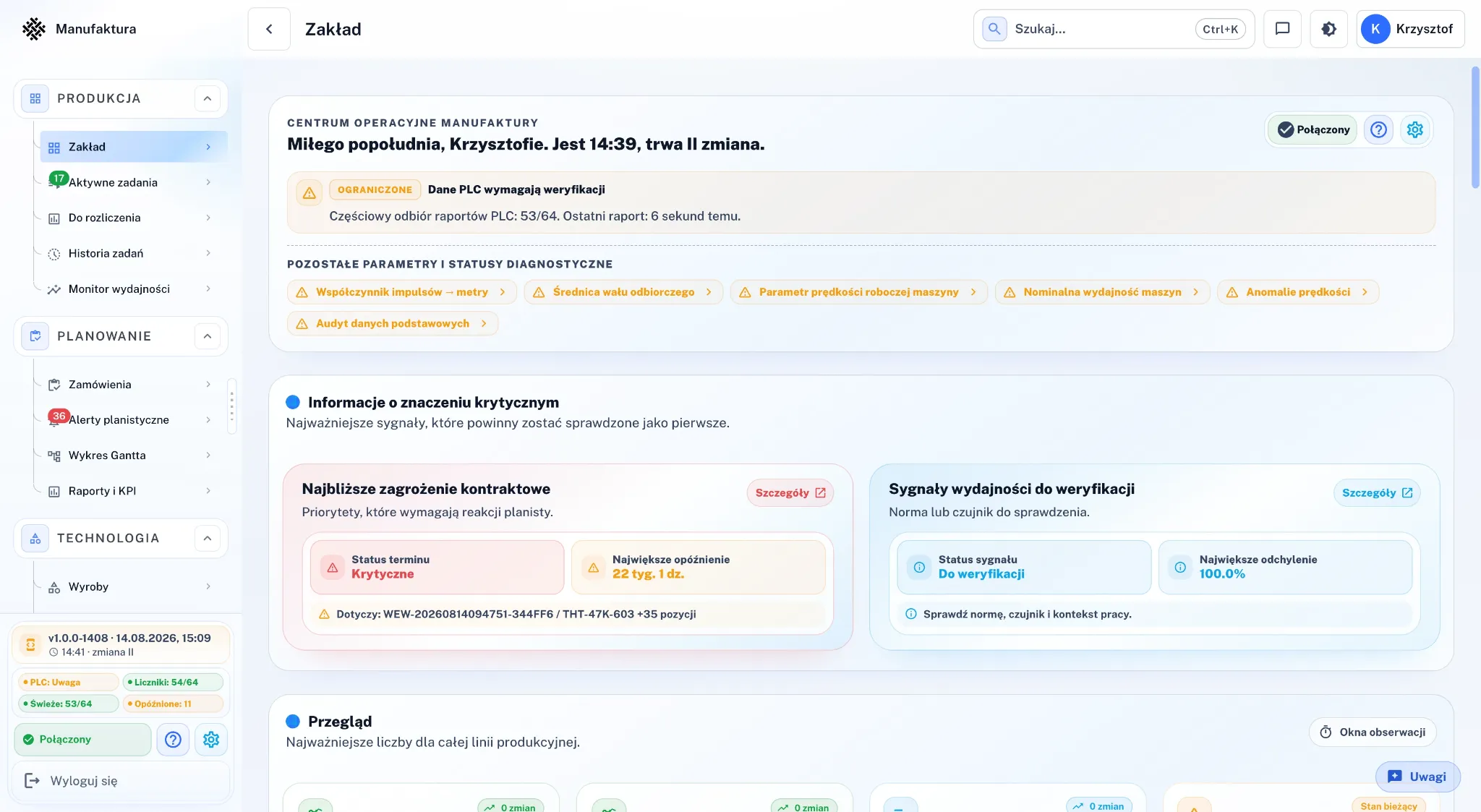
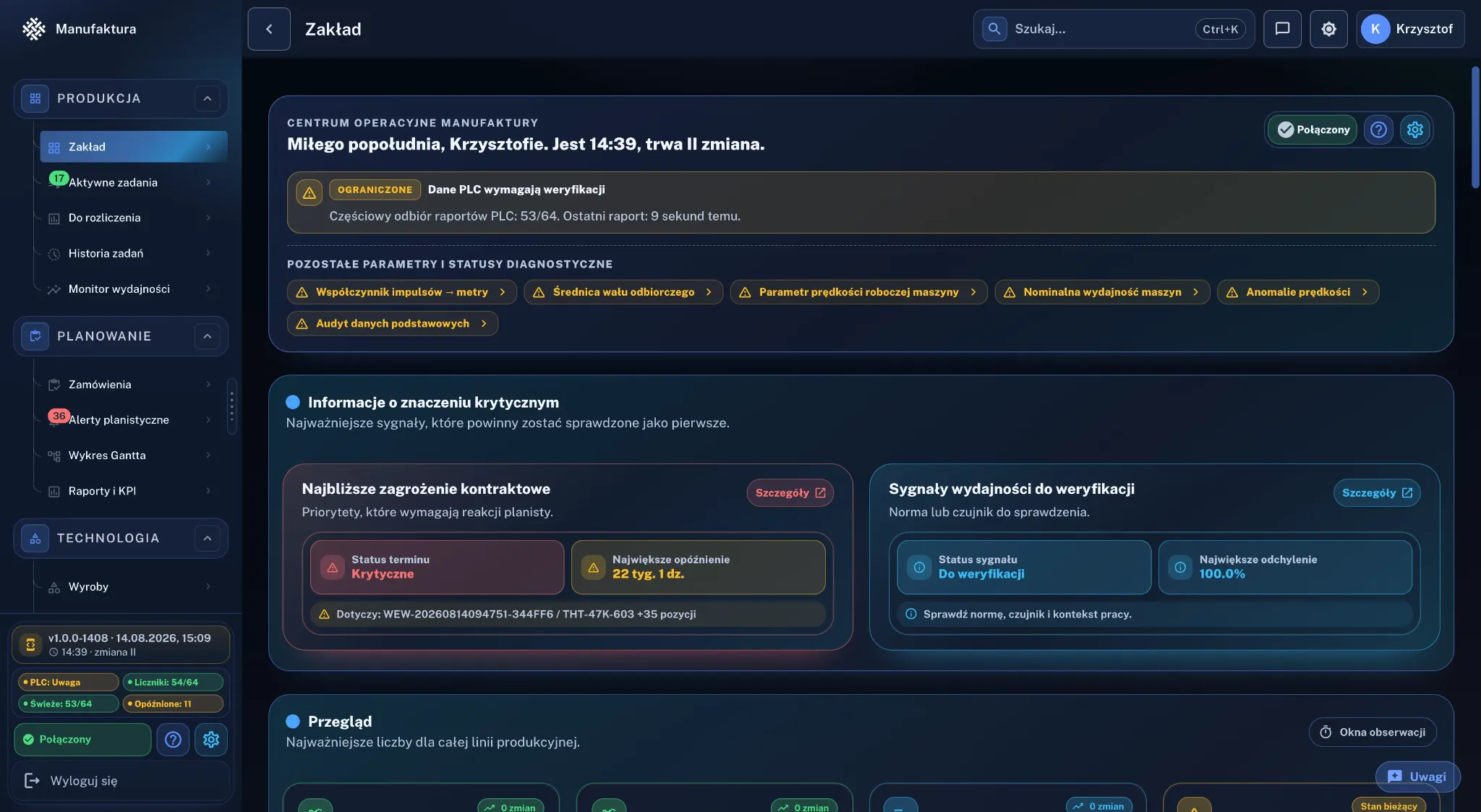
LIGHT DARK
- WHAT
- Production MES/APS spanning planning, execution, warehouse, ERP and machine-state telemetry.
- ROLE
- Production · sole technical owner
- PROOF
- 38 domains · 396 endpoints · 1,789 test methods
Parcel intelligence · geospatial decision support
Okolica Działki
PRODUCT PREVIEW
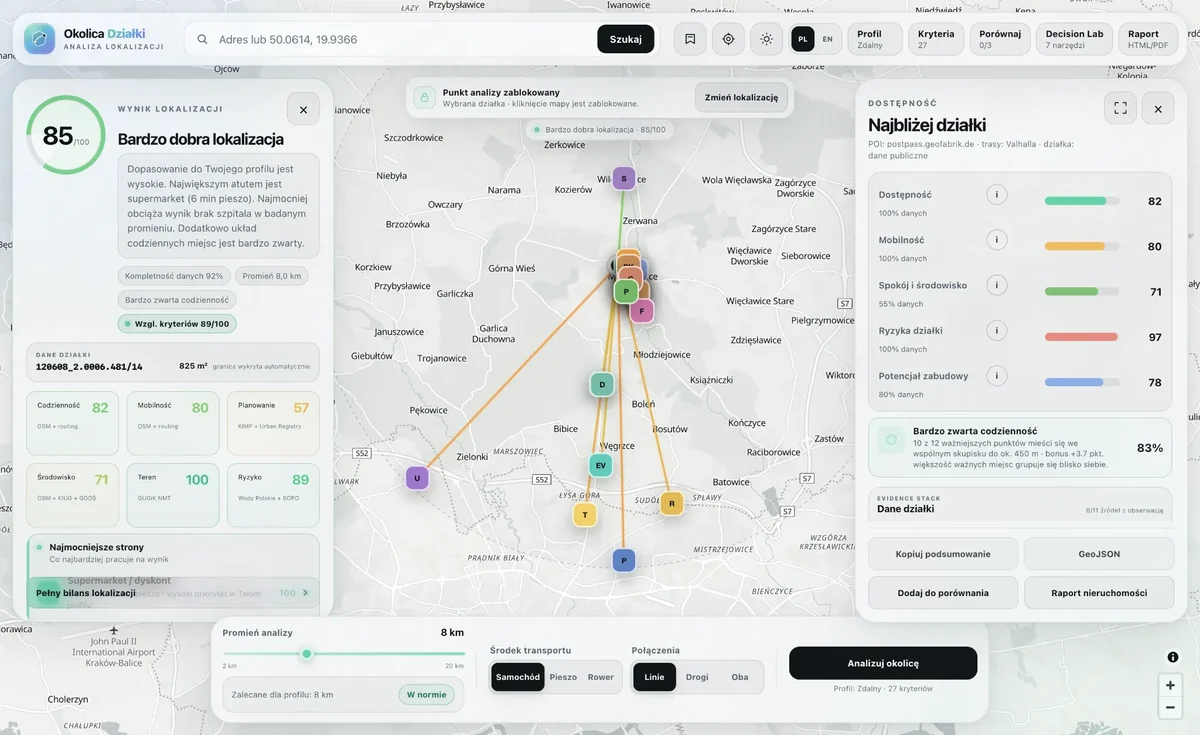
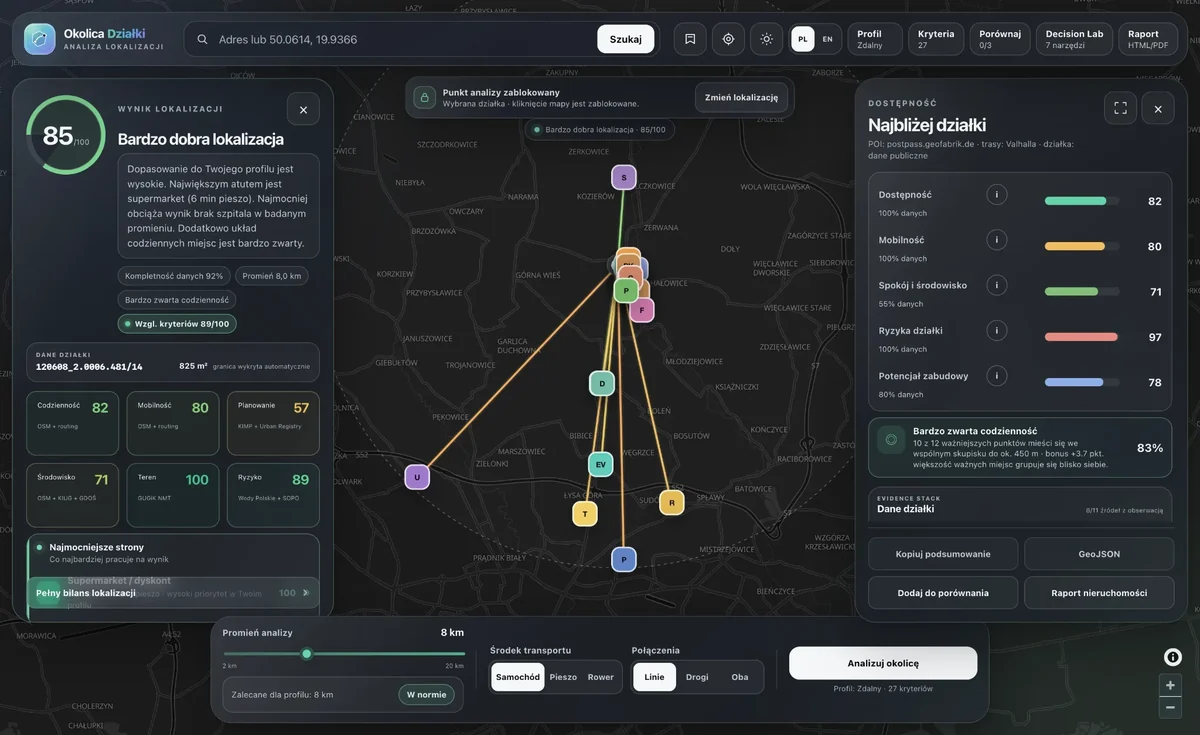
LIGHT DARK
- WHAT
- Parcel-level decision support combining cadastral, mobility, planning, terrain and risk evidence.
- ROLE
- Product architect · full-stack engineer
- PROOF
- 6 domains · 10+ source families · 60 regression tests
Agentic delivery
Agentic Delivery
PRODUCT PREVIEW
PREVIEW IN PREPARATION Visual material will appear after the current revision is complete.
- WHAT
- Repository-aware agentic delivery workflow with constrained tools, validation and review gates.
- ROLE
- AI-native software delivery
- PROOF
- MCP · validation · independent review
02 / EVIDENCE ARCHIVE
Case files, runtime traces, production signals and modernization records. Open a file for a compact evidence view; when it belongs to a flagship system, continue into the full case study.
Case files
Problem, engineering move and outcome kept as compact inspectable narratives.
Runtime traces
Execution evidence from browser-native model internals rather than a prerecorded visual demo.
Production evidence
Counts, acceptance and profiling signals attached to production delivery.
Modernization records
Operational modernization work that is useful evidence even without a standalone flagship case.
Interactive model · GPT Nano
A real 3-block, 3-head, 48-channel transformer runs entirely in the browser. Change the token sequence, walk through 42 observable stages and inspect the tensors, attention weights and residual stream produced by the actual WASM forward pass.
Forward-pass microscope Real weights. Real tensors. Zero server inference.
85,728 parameters42 stages3 × 3 heads11-token context
Case study in preparation Real tensors · native WASM · browser-only inference
GPT Nano / Forward-pass microscope
0 params · 0 B
LOADING
LOADING
Model graph42 observable stages
3 blocks3 heads48 dmodel11 context
3 ops
B1·ATTN
12 ops
12 ops
3 ops
Sequence · click seed tokens to cycle A/B/C
Forward-pass microscope
B1·ATTN07 / 42
Compute only on interaction · residual stream is static while idle6 / 11 positions · 0 live values · orbit with dragInfluenced by llm-viz
Drag to orbit · wheel / pinch to zoom · hover sequence to inspect position · double-click to recenter
Loading the real model.
weights + native compute core · zero server inference
Focus
I am deliberately moving the center of gravity toward AI-native engineering without discarding the part that matters most: architecture, reliability, observability, security and delivery under real operational constraints.
AI systems & agentic engineering
Agent workflows, MCP integrations, context engineering, tool orchestration, evaluation and guardrails alongside browser-native inference and LLM platform architecture.
Production-grade platforms
Enterprise and industrial systems across .NET, TypeScript, data, integrations and observability. The same discipline that keeps operational software alive is what I bring to AI systems.
Technical ownership & modernization
Architecture, implementation, performance, security, testing, deployment, UAT and handover stay under one engineering owner. That includes stabilizing systems that cannot simply be rewritten from scratch.
Tooling / stack
MCPAgent workflowsContext engineeringEvaluationC#.NET 10ASP.NET CoreEF CoreReact 18TypeScriptPostgreSQLSQL ServerSignalROpenTelemetryxUnitVitestDockerGitHub ActionsCloudflareAWS
Experience
The trajectory runs through infrastructure, security, full-stack products and manufacturing systems into AI-native engineering. The common thread is ownership: understand the domain, build the system, measure it and carry it into production.
Manufaktura MES/APS · client NDA
Technical Owner / Sole Full-Stack .NET Engineer · contract via VaptureProduction Manufaktura MES/APS: 38 functional domains, 396 active REST endpoints, 112 persistence entities and 1,789 automated test methods, with machine telemetry flows covering 54+ machines. Also designed and operated a repository-aware agentic delivery workflow using custom agents and MCP tools.
NATA Automation
Full-Stack Software Engineer / MES Engineer · contract via VaptureFrontend modernization, production-domain logic, deployment automation, SignalR machine updates and authentication / credential-storage modernization.
Vapture · Independent Software Consultancy
Founder / Software Consultant & Full-Stack EngineerFive long-term NDA clients across healthcare, travel, localization and enterprise software; full SDLC ownership from discovery to maintenance.
WSEI Kraków
Software Developer & Project LeadInternal .NET and WordPress systems, Azure environments and cross-functional leadership for hackathons serving 100+ participants.
Archman
Penetration Tester & Security Consultant · part-timeBlack-box testing and OWASP Top 10 assessments of an enterprise ECM platform using Burp Suite, Nmap, OWASP ZAP and Wireshark.
Wieliczka Salt Mine
Database Administrator & Network SpecialistNetwork-topology and infrastructure handover documentation plus Oracle Database migrations.
Notes
Opinionated notes on agentic engineering, context, MCP, production architecture, performance and the decisions that make software dependable.
All notesAgents need release engineering, not just better prompts
A practical model for turning agentic coding from an impressive demo into a controlled delivery loop with context, evidence and human-owned releases.
UAT is not the end of development
What resolving 112 client-reported UAT issues taught me about treating acceptance as a production-design feedback loop, not a release gate.
Treat MCP as an operational contract
Why MCP integrations become more useful when you design them like production interfaces: narrow capabilities, explicit trust boundaries and observable tool calls.